Introduction
Financial management is one of the most critical aspects of running a successful small business. From tracking cash flow and managing expenses to ensuring timely invoicing and maintaining accurate financial records, every decision directly impacts profitability and long-term sustainability. However, many small businesses struggle with manual bookkeeping methods, disconnected spreadsheets, and time-consuming accounting processes.
This is where modern cloud-based accounting solutions like Xero play a transformative role. Designed specifically to simplify financial operations, Xero helps small businesses gain real-time visibility, automate core accounting tasks, and make informed financial decisions with confidence.
In this article, we explore how Xero improves financial management for small businesses, its key features, practical applications, and the real value it delivers in day-to-day business operations.
What Is Financial Management in Small Businesses?
Financial management refers to the process of planning, organizing, controlling, and monitoring financial resources to achieve business objectives. For small businesses, this includes:
- Tracking income and expenses
- Managing cash flow
- Preparing financial statements
- Ensuring tax compliance
- Budgeting and forecasting
Effective financial management ensures that a business remains profitable, avoids cash shortages, and maintains long-term stability.
However, traditional methods often fail to provide real-time insights, leading to delays in decision-making and financial inefficiencies.
Challenges Small Businesses Face in Financial Management
Before understanding how Xero helps, it is important to recognize the common challenges small businesses face:
Manual Bookkeeping Errors
Many small businesses still rely on spreadsheets or manual entry, which increases the risk of human error.
Lack of Real-Time Financial Visibility
Without updated data, business owners often make decisions based on outdated financial information.
Poor Cash Flow Management
Delayed invoicing or missed payments can lead to cash flow shortages.
Time-Consuming Processes
Tasks like bank reconciliation, invoice tracking, and expense categorization can take hours each week.
Compliance Difficulties
Maintaining accurate records for tax filing and audits can become overwhelming without proper systems.
These challenges highlight the need for an integrated, automated solution like Xero.
How Xero Transforms Financial Management for Small Businesses
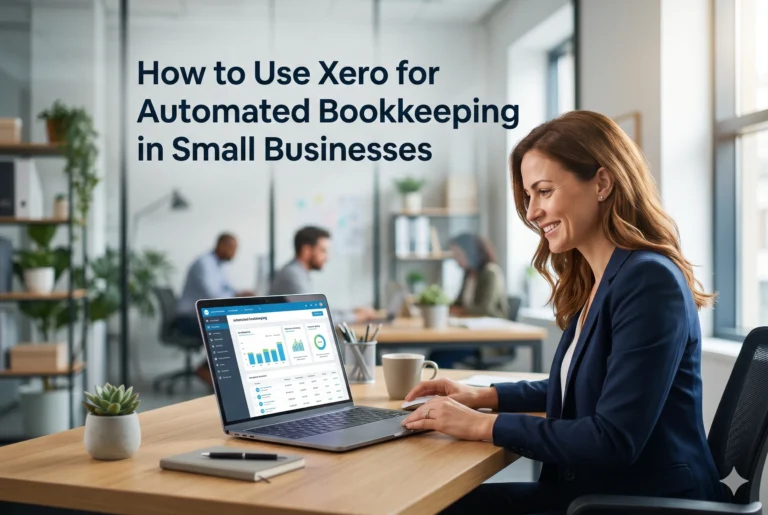
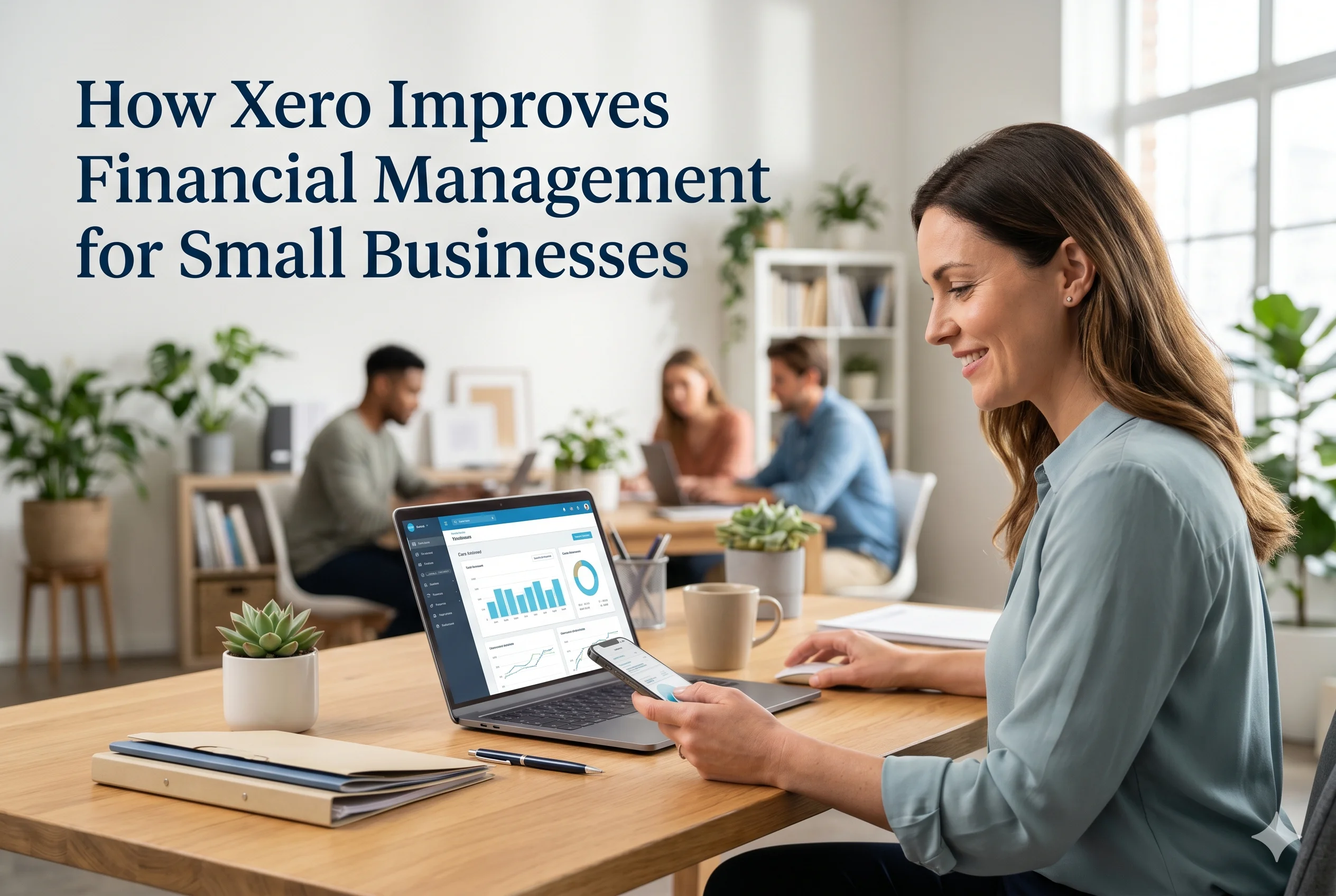
Xero is a cloud-based accounting platform designed to simplify financial management through automation, integration, and real-time reporting.
Below are the key ways Xero improves financial control and efficiency.
Real-Time Financial Visibility
One of Xero’s most powerful features is its ability to provide real-time financial insights.
How it works:
- Automatically syncs with bank accounts
- Updates transactions instantly
- Displays up-to-date financial dashboards
Business Impact:
Small business owners can:
- Monitor cash flow instantly
- Track profits and losses in real time
- Make faster financial decisions
Example:
A retail store owner can instantly see daily sales performance and adjust inventory purchasing accordingly.
Automated Invoicing and Payments
Cash flow is the lifeline of any small business, and invoicing plays a critical role.
Xero’s invoicing capabilities:
- Create and send professional invoices
- Automate recurring invoices
- Set payment reminders for customers
- Accept online payments
Benefits:
- Faster payments
- Reduced manual work
- Improved cash flow stability
Efficient Expense Management
Tracking expenses manually can be time-consuming and error-prone. Xero simplifies this through automation.
Features:
- Upload receipts via mobile app
- Auto-categorize expenses
- Link expenses to bank transactions
Business Value:
- Accurate expense tracking
- Better cost control
- Easier tax preparation
Bank Reconciliation Automation
Bank reconciliation is one of the most time-intensive accounting tasks.
Xero automates this process by:
- Matching bank transactions with accounting records
- Highlighting unmatched entries
- Suggesting reconciliation options
Result:
What used to take hours can now be completed in minutes, improving accuracy and efficiency.
Advanced Financial Reporting
Xero provides detailed financial reports that help businesses understand performance clearly.
Key reports include:
- Profit and Loss Statement
- Balance Sheet
- Cash Flow Statement
- Accounts Receivable and Payable reports
Benefits:
- Clear understanding of financial health
- Data-driven decision-making
- Better forecasting and planning
Improved Cash Flow Management
Cash flow is often the biggest challenge for small businesses.
Xero helps by:
- Tracking incoming and outgoing cash
- Providing cash flow forecasts
- Identifying overdue payments
Practical Example:
A service-based business can predict future cash shortages and plan expenses accordingly.
Multi-User Collaboration
Small businesses often work with accountants, bookkeepers, and financial advisors.
Xero enables:
- Multiple user access with role permissions
- Real-time collaboration
- Secure data sharing
Benefit:
Accountants can work directly on live financial data, reducing delays and miscommunication.
Integration with Business Tools
Xero integrates with hundreds of business applications, including:
- Payment gateways
- Payroll systems
- Inventory management tools
- CRM systems
Business Impact:
Creates a fully connected financial ecosystem, eliminating manual data transfer.
Xero vs Traditional Accounting Methods
| Feature | Traditional Accounting | Xero |
|---|---|---|
| Data Updates | Delayed | Real-time |
| Accuracy | Prone to errors | Highly accurate |
| Accessibility | Limited to office systems | Cloud-based access |
| Automation | Minimal | High automation |
| Reporting | Manual preparation | Instant reports |
This comparison clearly shows why modern businesses are shifting toward cloud accounting solutions.
Practical Use Cases of Xero in Small Businesses
E-commerce Businesses
- Tracks online sales automatically
- Manages supplier payments
- Handles multi-channel transactions
Service-Based Businesses
- Generates invoices for clients
- Tracks billable hours
- Monitors project profitability
Retail Businesses
- Manages inventory-related expenses
- Tracks daily sales performance
- Simplifies tax reporting
Freelancers and Startups
- Simplified invoicing
- Easy expense tracking
- Low-cost financial management solution
Key Benefits of Xero for Financial Management
Time Efficiency
Automates repetitive accounting tasks, saving hours each week.
Better Decision-Making
Provides real-time financial insights for smarter decisions.
Improved Accuracy
Reduces manual errors in bookkeeping and reporting.
Stronger Cash Flow Control
Helps businesses monitor and manage cash flow effectively.
Scalability
Suitable for businesses at any growth stage.
Cost Savings
Reduces dependency on manual accounting processes and large accounting teams.
Why Small Businesses Should Adopt Xero
In today’s competitive environment, small businesses need agility, accuracy, and real-time control over their finances. Traditional accounting methods are no longer sufficient to meet these demands.
Xero provides a complete financial management solution that combines automation, visibility, and integration. It empowers small business owners to focus more on growth and less on administrative financial tasks.
Conclusion
Effective financial management is the foundation of every successful small business. From managing cash flow and expenses to maintaining accurate financial records, businesses require tools that provide clarity, efficiency, and control.
Xero delivers all of this through its cloud-based platform, offering real-time insights, automated processes, and seamless financial tracking. By eliminating manual errors and simplifying complex accounting tasks, Xero enables small businesses to operate more efficiently and make better financial decisions.
For small business owners aiming to scale sustainably, adopting Xero is not just a technological upgrade—it is a strategic step toward stronger financial management and long-term business success.